Sublimation Ink vs DTF Ink: Which Does Your Setup Need? (October 2026)
Use sublimation ink for coated blanks and polyester, and DTF ink for transfers across more fabric types. Your printer and transfer workflow must match the ink; the 2 are not interchangeable.
On this page (9 sections)
- Sublimation Ink vs DTF Ink: Which Does Your Setup Need?
- What is the difference between sublimation ink and DTF ink?
- Which fabrics and blanks suit each ink?
- What printer setup does each ink need?
- How do the transfer steps compare?
- Which setup is easier to maintain?
- Can you switch from sublimation ink to DTF ink?
- Which ink should you choose for your setup?
- Which ink fits your workflow?
Sublimation Ink vs DTF Ink: Which Does Your Setup Need?
Sublimation ink suits polyester and coated blanks, while DTF ink suits transfers for a wider range of fabrics, including cotton. In the sublimation ink vs DTF ink choice, start with the materials you want to print and the printer workflow you already have.
The inks are formulated for different transfer methods. Changing ink alone does not turn one setup into the other, so match the printer, ink, transfer materials, and heat process.
What is the difference between sublimation ink and DTF ink?
Sublimation ink is dye used to transfer designs to polyester or coated surfaces; DTF ink is used to print a design onto film for a fabric transfer. The key difference is how the design reaches the final material.
Sublimation relies on heat to move dye from printed transfer paper into compatible polyester or a polymer coating. The color becomes part of that receiving surface, so the method is not suited to untreated cotton.
DTF stands for direct to film. The printer puts DTF ink onto a film, and the transfer workflow uses adhesive powder before pressing the design onto fabric.
That difference affects setup, materials, and the kinds of projects each method can handle. For a fuller overview of the two processes, see Sublimation vs Direct to Film: A Quick Primer.
Sublimation ink vs DTF ink chemistry
Sublimation ink uses dye, while DTF ink uses pigment for a film-based transfer. For a closer comparison, read sublimation ink vs pigment ink.
Both may be water-based, but that shared trait does not make them interchangeable.
A sublimation refill such as Printers Jack 400ML Sublimation Ink for Epson is water-based dye sublimation ink for polyester or coated products. The set contains four 100 ml bottles, one each in black, cyan, magenta, and yellow.
DTF sets such as Enlite DTF Ink 250ML Combo Pack are water-based DTF ink for film and powder workflows. Enlite names cotton, polyester, linen, nylon, and blends among its fabric uses.
Which fabrics and blanks suit each ink?
Choose sublimation ink for polyester fabric or a coated blank, and DTF ink when you need to transfer designs onto cotton or other fabric types. Check the material composition and coating before you commit to a workflow.
Sublimation is a fit for polyester shirts and coated items such as mugs or phone cases. Printers Jack says its ink is for polyester or coated products, not cotton.
Hiipoo says its sublimation ink can be used on fabrics containing less than 30% cotton. Check the fabric blend and product guidance for the ink you choose.
DTF can cover a broader fabric mix, including cotton, polyester, linen, nylon, and blends, depending on the ink and transfer setup. It can help when your product range includes cotton shirts as well as synthetic fabrics.
The practical choice is the blank, not just the color you want on screen. A polyester garment and a cotton hoodie can call for different transfer methods even when the artwork is identical.
Will sublimation ink work on cotton?
Sublimation ink is not the right choice for untreated cotton. It needs polyester fibers or a compatible coating to hold the transferred dye.
Some sublimation ink guidance allows fabrics with a low cotton share, but the limit varies by product. Check the specific ink and blank requirements rather than assuming every fabric blend will work.
For an overview of the material and process tradeoffs, read Is DTF Better Than Sublimation? Explained.
The answer depends on what you print most often and how much setup complexity you can manage.
What printer setup does each ink need?
Use sublimation ink in a compatible sublimation printer setup and DTF ink in a printer configured for DTF. Printer compatibility is specific, so verify the exact model before filling tanks or changing ink.
Sublimation refills may be made for certain Epson EcoTank, WorkForce, or other inkjet models. For example, Hiipoo Sublimation Ink Refilled Bottles Compatible names several compatible Epson models, but that list does not mean every Epson printer can use it.
A DTF setup needs more than the ink itself. It uses film and powder, and the printer, printhead, software, and ink delivery need to suit that workflow.
Switching a printer from one ink type to another can require clearing the previous ink from cartridges and the internal ink supply system. Enlite advises cleaning the previous ink from both before adding its ink.
Does DTF ink need white ink?
White ink can be part of a DTF setup, especially when designs need an opaque base on dark fabric. DTF sets may include white alongside cyan, magenta, yellow, and black inks.
The Lancelot DTF Ink 250ml x6 Set includes CMYK plus 2 white bottles. Lancelot says to shake white ink before adding it to help prevent sedimentation.
A sublimation setup does not use white ink in the same way. Since sublimation depends on the color of the polyester or coated blank, white areas in the artwork usually leave the blank material visible.
How do the transfer steps compare?
Sublimation prints onto transfer paper and presses the image into a compatible blank; DTF prints onto film and then transfers the film design to fabric. Both use heat, but each needs its own materials and settings.
For sublimation, print with the correct ink and settings, position the transfer on the blank, and apply heat according to the blank and equipment guidance. The finished result depends on the surface being suitable for sublimation.
For DTF, print the design onto DTF film, apply the required adhesive powder, cure it as directed, and press the transfer onto fabric. Film, powder, temperature, time, and pressure all affect the result.
These steps also influence what you need to store and maintain. DTF adds film and powder handling, while sublimation needs suitable blanks and transfer paper.
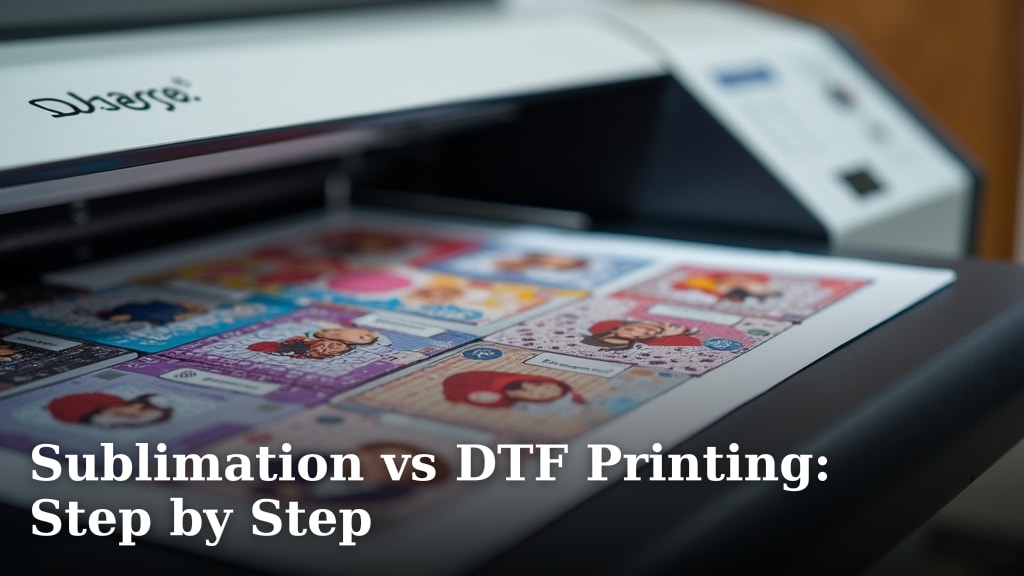
For more on the process differences, see Sublimation vs DTF Printing: Step by Step. If you're deciding between finished transfer styles, [What Is DTF Transfer vs Sublimation?
Here’s the Answer](/what-is-dtf-transfer-vs-sublimation/) explains how the methods differ.
Which setup is easier to maintain?
The easier setup is the one that matches your printer and the work you plan to repeat. Don't judge the workflow by ink alone; consider cleaning, consumables, and how often you'll print.
Sublimation may be simpler when you already have a compatible printer and mostly make polyester or coated items. You still need to manage ink, transfer paper, color settings, and heat application.
DTF has extra process steps, including film and powder. White ink can also need specific handling, and changing ink types may require cleaning the internal supply path to avoid mixing incompatible inks.
Before choosing, make a short list of the products you expect to print each month. A narrow range of coated blanks can favor sublimation, while mixed-fabric apparel may make DTF worth the added steps.
Can you switch from sublimation ink to DTF ink?
You should not pour DTF ink into a sublimation printer tank as a simple swap. The printer may need to be configured or converted for DTF, and the existing ink system may need a thorough clean.
The reverse also applies: sublimation ink is not a direct replacement for DTF ink in a film-based printer workflow. Ink chemistry, printhead configuration, color management, and transfer materials all need to align.
If you are considering a conversion, check the printer maker's guidance and the ink supplier's instructions for the exact model. An incorrect change can cause poor prints or ink flow problems.
Which ink should you choose for your setup?
Pick sublimation ink for polyester and coated blanks; pick DTF ink for a broader fabric range that includes cotton. Then confirm that your printer is compatible with the chosen ink and transfer method.
Sublimation ink is the more direct fit if you make polyester shirts, mugs, or coated gift items with a compatible printer. For a related comparison with another transfer approach, see Infusible Ink vs Sublimation Ink: Everything to Know.
DTF ink makes more sense if you want to print designs onto cotton and varied fabric blends. It brings additional supplies and steps, so weigh that against the flexibility you need.
If your question is about inkjet ink in general, see Difference Between Sublimation Ink and Inkjet. For a different printer choice, compare the white toner printer vs sublimation printer, or consider whether printable vinyl vs sticker paper fits a project that does not call for a heat transfer.
 Best for polyester projects
Printers Jack 400ML Sublimation Ink for Epson
 Best for compatible Epson printers
Hiipoo Sublimation Ink Refilled Bottles Compatible
Which ink fits your workflow?
Choose the ink that matches your printer and the materials you plan to decorate most. Sublimation favors polyester and coated blanks; DTF offers a wider fabric range with a more involved transfer process.
For a polyester shirt or coated mug, a compatible sublimation setup is the straightforward choice. For cotton shirts and mixed fabrics, DTF is usually the more suitable route.
Don't buy ink based only on a printer model name or a broad compatibility claim. Confirm the exact printer, printhead, and transfer materials, then follow the setup instructions for that system.
Frequently asked questions
Can you use sublimation ink in a DTF printer?
No, sublimation ink and DTF ink serve different transfer workflows. Use ink made for your printer and process: sublimation transfers dye to polyester or a coated blank, while DTF uses ink on film with powder before heat pressing the transfer onto fabric.
Can you use DTF ink in a sublimation printer?
No, don't treat DTF ink as a drop-in replacement for sublimation ink. DTF ink is used with a film and powder transfer process, and a printer needs the right configuration for that workflow.
Check the printer maker's guidance before changing ink.
Which ink works on cotton?
DTF ink is the better fit when cotton is part of your project, because the transfer can be applied to a wider range of fabrics. Sublimation ink is intended for polyester or coated products, and it does not bond to untreated cotton in the same way.
Do both workflows need a heat press?
Both workflows use heat to transfer a design, but the steps differ. Sublimation transfers from printed paper to polyester or a coated blank, while DTF ink is printed onto film and combined with powder before the transfer is pressed onto fabric.