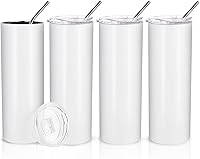
Can You Sublimate Clear Glass?
Yes, you can sublimate clear glass if it has a compatible sublimation coating. Because the glass is transparent, the design may look faint without a white or light-colored layer behind it.
On this page (7 sections)
- Can you sublimate clear glass successfully?
- Why does a clear glass transfer look faint?
- How can you tell if clear glass is sublimation-ready?
- What should you check before pressing clear glass?
- Can you use ordinary clear glass without a coating?
- Which supplies help with a clear glass sublimation project?
- What is the safest way to choose a clear glass blank?
Yes, you can sublimate clear glass if it has a compatible polymer coating. Since clear glass is transparent, the design may look faint unless the blank has a white or light-colored layer behind the transfer.
Ordinary glass doesn't take sublimation dye the way a coated blank does. Before you press, check that the item is made for sublimation and follow its instructions for temperature, time, pressure, and handling.
Can you sublimate clear glass successfully?
Yes, when the glass has a sublimation coating and the setup matches the blank. Heat turns the ink into gas, which bonds with the polymer coating; it doesn't bond to ordinary glass by itself.
The coating may be clear, white, or another color. A clear coating can leave the design translucent, while a white backing can help colors look stronger.
Confirm the construction before ordering, since a glass surface that looks printable isn't necessarily sublimation-ready.
If you are comparing materials, our sublimation blanks products guide explains what to check before choosing a blank. For glass options made for this process, see best glass sublimation blanks.
Why does a clear glass transfer look faint?
A design on transparent glass can look washed out because light and the background pass through it. Sublimation ink is not opaque, so dark or busy surroundings can make the colors harder to see.
A white or light-colored layer behind the print can improve contrast. Some glass blanks include a white sublimation coating, while others leave the design on a transparent surface.
Look for that detail in the blank's description and instructions.
You can also plan the design around transparency. Simple shapes and darker colors may be easier to see than pale details, but the result depends on the coating, artwork, lighting, and what sits behind the glass.
Does clear glass need a white coating for sublimation?
No, a white coating isn't required for the dye to bond, but it can make the design more visible. A compatible clear polymer coating can accept sublimation ink while still allowing the glass to remain see-through.
Choose clear-coated glass if you want a translucent look. Choose a blank with a white or light backing if you want stronger contrast and more opaque-looking colors.
How can you tell if clear glass is sublimation-ready?
Check the blank's instructions for explicit sublimation compatibility and a polymer coating. Don't assume that a smooth, clean glass surface is enough.
Confirm whether the item is flat or curved, whether it has a white backing, and what heating method its maker recommends. Also check whether your press attachment fits the shape.
A flat panel and a curved glass can need different equipment and pressure.
The guide to sublimation on frosted glass covers another glass surface option. For drinkware, compare the instructions in our guides to sublimating glass cans and sublimating glass tumblers.
What should you check before pressing clear glass?
Use the blank's own press settings and make sure your press suits its shape. Glass can crack if it experiences a sudden temperature change, so follow the maker's heating and cooling directions.
Before pressing:
- Confirm the blank is designed for sublimation.
- Read its recommended time, temperature, pressure, and cooling steps.
- Make sure the press attachment matches the glass shape.
- Place the transfer as instructed and secure it evenly.
- Use any protective paper or wrap required by the blank maker.
Don't guess at settings from a different glass blank. Coatings and shapes vary, and a setting that works on one item may not suit another.
Can you use ordinary clear glass without a coating?
No, ordinary uncoated glass isn't a reliable surface for sublimation dye. The dye needs a suitable polymer coating to bond; adding heat to plain glass doesn't create that coating.
Use a blank labeled for sublimation, or choose a different decorating method that suits uncoated glass. Our overview of whether you can sublimate glass explains the coating requirement across glass types.
Sublimation also differs from methods that place ink or material on top of a surface. If you're weighing alternatives, see how sublimation compares with screen printing.
Which supplies help with a clear glass sublimation project?
Choose supplies that match the project, and use only equipment that supports the blank's instructions. These products serve different shop and craft tasks; none is a substitute for a sublimation-ready glass blank or a compatible press.
A wall-mounted planning surface can help you note blank-specific settings and keep a project checklist visible. The VIZ-PRO board has a magnetic writing surface and can be mounted horizontally or vertically.
For a project that calls for a fabric blank instead of glass, the Microfiber Wholesale pack contains 6 white waffle-weave polyester towels made for dye sublimation, with no pre-treatment required.
A flexible magnetic sheet has a white vinyl front and magnetic backing, and can be cut into custom shapes. Its stated use is inkjet printing, so it isn't a sublimation glass blank.
For drinkware, a compatible glass blank matters more than a general glass shape. For mugs, see how to sublimate mugs.
If you are shopping for a larger cup, compare 20 oz sublimation tumbler blanks and confirm the blank's coating and press instructions.
What is the safest way to choose a clear glass blank?
Pick a blank that clearly states it is sublimation-ready and explains how to press it. Favor instructions that identify the coating, press setup, and whether the finished design will remain transparent or have a light backing.
If you want a see-through result, choose a clear-coated blank and plan for the background to show through. If you want the artwork to stand out more, look for a white-backed or light-colored sublimation surface.
Clear glass works for sublimation when the coating and press method fit the item. Choose clear coating for a translucent effect, or a white-backed blank for more visible color, then follow the blank maker's instructions.
Frequently asked questions
Can you sublimate directly onto clear glass?
Only if the glass has a coating designed for sublimation. Ordinary uncoated glass doesn't provide the polymer surface needed to hold sublimation dye.
Check the blank's instructions, then use its recommended temperature, time, pressure, and protective materials.
Will sublimation show on clear glass?
It can, but the transparent surface lets the background show through the printed design. A white or light-colored coating or backing can make colors easier to see.
Check whether the glass blank has a white sublimation layer before pressing.
Can you sublimate on clear glass with a regular heat press?
Possibly, if the blank's shape and the press attachment are compatible. Flat glass may work with a flat press, while curved glass usually needs a suitable mug or tumbler attachment.
Follow the blank maker's instructions and protect the glass from sudden temperature changes.
Is frosted glass easier to sublimate than clear glass?
Frosted glass can make a design easier to see because its surface scatters light, but the blank still needs a sublimation-ready coating. Compare the surface and instructions before buying; a frosted appearance alone doesn't confirm sublimation compatibility.